
Feeling stuck in your online business? Discover how breaking through imposter syndrome, fear of failure, and perfectionism can help you build confidence. | Updated: June 3, 2026
This post includes affiliate links. If you purchase, I may earn a commission.
Starting an online business over 50 can bring up a lot of questions: Am I qualified? Is it too late? Do I really know enough to help someone? But here’s the truth — those thoughts may not be proof that you’re failing. They may be signs that imposter syndrome is trying to keep you quiet.
In this post, we’ll look at the difference between real success and the self-doubt that makes you question it. Because if you’ve got experience, wisdom, and a desire to build something meaningful, you may be far more ready than you think.
The key is learning how to stop second-guessing yourself and start taking simple, steady action toward your second act.

Table of Contents
Want to see the exact tools I use?
Check out my Software Stack for Beginners Over 50
Why Mindset Is the Missing Key
Struggling to grow your business? It might not be your strategy—it’s your mindset.
Here’s the reality: most entrepreneurs don’t fail because of a lack of skill, resources, or opportunity. They fail because of the silent battles going on in their minds—battles that create hesitation, doubt, and procrastination.
If you’ve ever felt stuck, second-guessed your abilities, or hesitated to take the next step in your business, you’re not alone. The truth is, three common mental blocks—imposter syndrome, fear of failure, and perfectionism—are responsible for derailing more business dreams than any marketing mistake or bad product launch.
But here’s the good news: these blocks can be broken. And once you do, you’ll unlock a level of clarity, confidence, and consistency that skyrockets your entrepreneurial success.
Mental Block #1: Imposter Syndrome
What It Is
Imposter syndrome is that inner voice whispering, “Who am I to do this?” or “I’m not good enough to succeed online.”
Even when you’re achieving milestones, you feel like a fraud—waiting for someone to “call you out.”
Studies show that up to 70% of people experience imposter syndrome, and entrepreneurs are even more prone because starting a business means stepping into the unknown.
Why Entrepreneurs Struggle With It
The trap often comes from comparison.
You see polished Instagram feeds, million-dollar launches, or creators with massive followings and think, “I’ll never be like them.”
But the truth? Even those “perfect” entrepreneurs wrestle with the same doubts behind the scenes.
Beginner-Friendly Steps to Beat It
- Track the Small Wins – Celebrate progress like setting up your first email list, publishing a blog, or making your first video. These tiny wins prove you’re moving forward when most people quit.
- Redefine “Good Enough” – You’re not supposed to master everything instantly. You’re in training. Think of your business like learning to drive—nobody starts with a Formula 1 car.
- Say It Out Loud – Speaking or writing your fears drains them of power. Once outside your head, you’ll often see how irrational they really are.
💡 Pro Tip: Ask yourself, “Would I talk to my best friend this way?” If not, stop being your own harshest critic.

Mental Block #2: Fear of Failure
How Fear Holds You Back
Fear of failure shows up in sneaky ways:
- “What if nobody reads my blog?”
- “What if my video flops?”
- “What if I spend months on this and it doesn’t work?”
If you let those “what ifs” dominate, you’ll stay stuck at the starting line—forever preparing but never launching.

Mindset Over Fear
Real Examples of Failure Turned to Success
Every successful entrepreneur has failed. Sara Blakely (founder of Spanx) was turned down by dozens of manufacturers.
Elon Musk’s first SpaceX rockets exploded. Failure wasn’t the end—it was the tuition they paid for long-term success.
Practical Ways to Break Free
- Redefine Failure – See it as feedback, not finality. Write down one lesson from every setback.
- Take Small Risks – Publish a short post, record a 30-second video, or share your idea with a friend. Small wins train your brain to see that the world doesn’t collapse when you try.
- Ground Your Vision in Action – Don’t just visualize success—take one tangible step each week that proves you’re moving closer.
📊 Research shows that entrepreneurs who reframe failure as feedback are 20% more likely to achieve long-term success.
Mental Block #3: Perfectionism
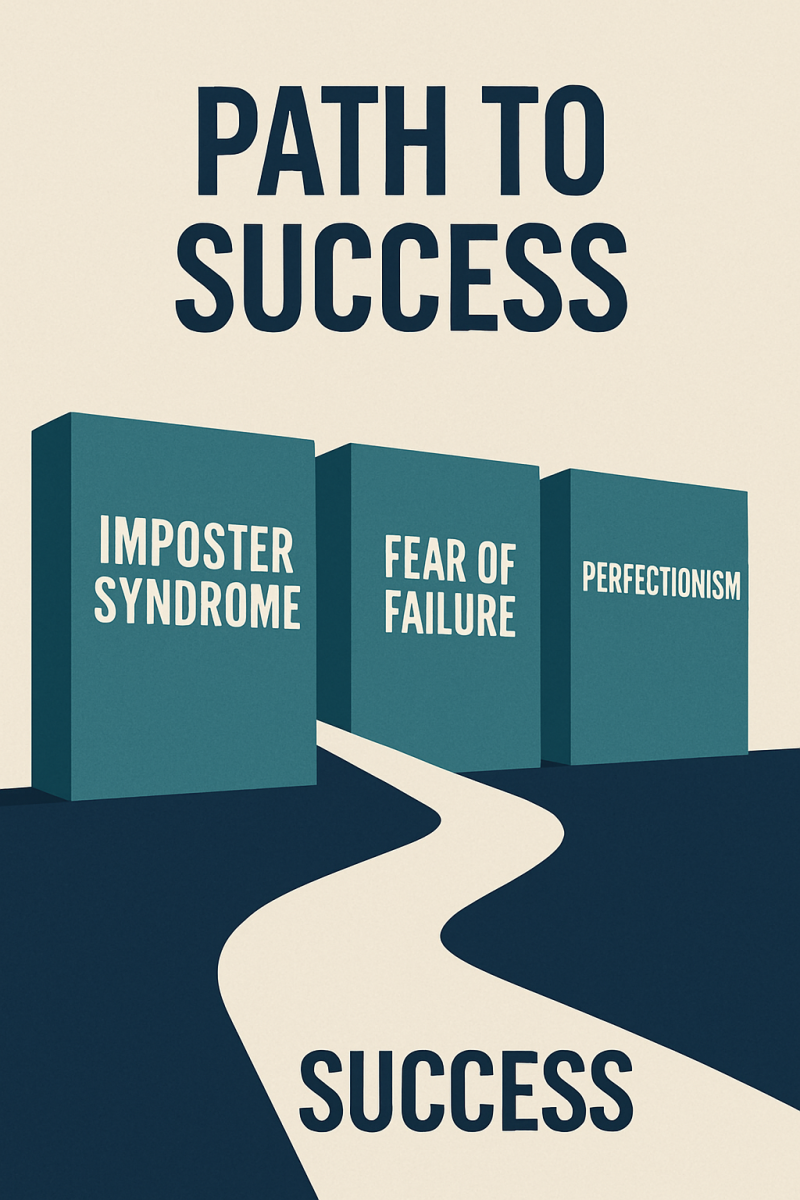
Path to Success
Why Perfection Is Just Fear in Disguise
Perfectionism often masquerades as “high standards,” but in reality it’s fear dressed up to look noble. It keeps you stuck tweaking, editing, and restarting—when what you really need to do is publish.
For beginners, this shows up as:
- Spending weeks on a logo.
- Rewriting one blog post ten times.
- Recording and deleting the same video over and over.
The truth? Nobody cares about your font choice. People care about your message and how it helps them.
Actionable Steps to Stop Tweaking and Start Doing
- Stop Chasing Perfect – Done beats perfect. Publish now, improve later.
- Set Deadlines – Give yourself one hour to complete a blog or one take for a video. Then move on.
- Celebrate Progress – Recognize every finished project, no matter how small. Completion builds momentum faster than endless editing.
🔥 Real Talk: Your first pancake is always messy, but you still eat it. Business is the same—your first attempt doesn’t need to be pretty, it just needs to exist.

Bonus Tip: Protect What You Feed Your Mind
Your mindset is shaped by your inputs. If you spend hours doom-scrolling negativity or hanging out with people who doubt everything, you’ll unconsciously adopt their mindset.
Instead:
- Follow creators who inspire and teach.
- Listen to podcasts that fuel belief.
- Limit exposure to negativity.
Even subtle changes in what you consume daily can drown out self-doubt and make it easier to stay consistent.

FAQ
What are the biggest mental blocks in entrepreneurship?
The biggest mental blocks in entrepreneurship are imposter syndrome, fear of failure, and perfectionism. These can keep you stuck in self-doubt, comparison, and overthinking instead of taking action.
How do I overcome imposter syndrome as an entrepreneur?
Track small wins, redefine what “good enough” means, and say negative thoughts out loud to weaken their grip. Over time, these actions retrain your brain to focus on progress, not comparison.
Why is fear of failure so common in business?
Fear of failure is natural because starting a business involves uncertainty. However, successful entrepreneurs see failure as feedback, not finality. Small risks—like publishing your first blog or video—train your mind to embrace growth.
How can perfectionism hurt my business?
Perfectionism keeps you tweaking instead of launching, which stalls growth. Remember: done beats perfect. Publishing imperfect work allows you to learn, improve, and build momentum.
What mindset shift helps entrepreneurs succeed the fastest?
The most powerful shift is learning to act before you feel “ready.” Consistent action builds confidence, and confidence fuels success. Start small, stay consistent, and your momentum will skyrocket.
Final Thoughts: Build Momentum, One Step at a Time
Breaking free from imposter syndrome, fear of failure, and perfectionism won’t happen overnight. But every small action chips away at the mental blocks keeping you stuck.
👉 Here’s your challenge this week: Pick one strategy from this article—like keeping a success journal, setting a deadline, or posting a piece of content before it feels “ready.” Do it. Then repeat.
Momentum is built through consistency, not perfection. The sooner you act, the sooner your confidence grows—and the faster your business takes off.
Remember: You’ve got this. The only real failure is never starting. Get your own FREE Starter Kit

entrepreneur mindset, mindset blocks, mental blocks in entrepreneurship, imposter syndrome, fear of failure, perfectionism, business mindset, entrepreneur confidence,
This article includes affiliate links. If you purchase, I may earn a commission.
Written by Steve Neifing

Steve Neifing is the founder of Second-Act AI, where he helps adults over 50 turn their experience, skills, and passions into online income using practical AI tools and simple digital strategies. He shares real-world guidance, clear step-by-step training, and no-hype insights to help people build a meaningful second act with confidence.
This post includes affiliate links. If you purchase, I may earn a commission.

Add comment
Comments